Is Religious Devotion the Only Way to Connect With God? Or Is It Just a Socially Acceptable Way To Be Seen as Holy?
Growing up Catholic in Nigeria, I witnessed the beauty and the burdens of religious devotion. But as I got older, I began to question the distance between what we practiced and what we preached.
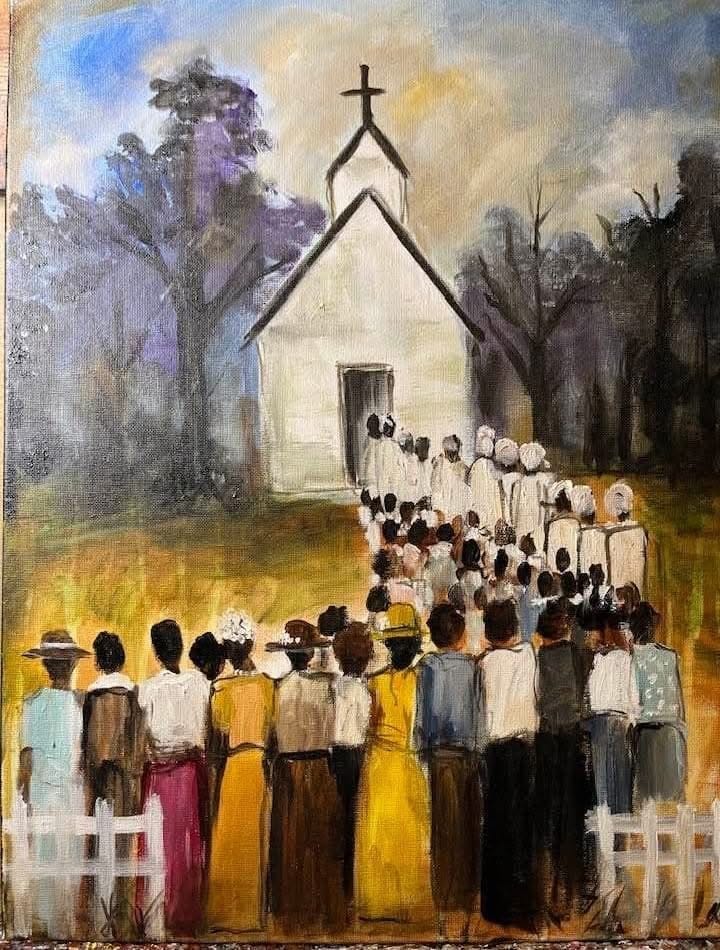
From as early as I can remember, my parents were deeply dedicated to the Catholic Church. Sunday Mass wasn’t optional, weekday services too. At some point, it became a daily thing. And when I was of age, I received religious training and joined the adults in my church in receiving Holy Communion. Accompanied by block rosary attendance, which eventually led to dedicating more of my time as a branch secretary. You see, at a young age I was already quite the leader. Yet, it all felt very… performative.
Though there was a curious part of me that explored religious books and asked questions around faith and spirituality because I wanted to understand these things for myself. But there were some things I couldn’t reconcile:
Like, how do people go to church and come home to fight with their loved ones?
How do you pray and fast and still keep malice?
How do you speak to God and still judge your neighbor?
These questions lived in my head for years. I didn’t understand the complexity of human behavior. I only saw things in black and white, because that is how I was raised, to judge whatever seemed uncertain or different.
I didn’t get why my dad got so angry when we dozed off during prayers. Or why I felt so ridden with guilt when I told a “convenient casual lie” that prevented me from receiving communion. Or why my parents would probe endlessly to find out if the sin that prevented me from taking communion was a “small” sin or a “big” one.
It all felt like the rituals were more important than how I felt on the inside. In my heart.
Subscribed yet? Trust me, you will enjoy more essays from Ezinne’s Lens!
https://ezinneslens.substack.com/
Being Catholic is hard work. It demands discipline, self-denial, and constant reflection. It’s a high standard to meet. Sometimes an impossible one. In trying to do good, we are tempted to look good, and that feeds the ego, not the spirit.
As a teenager, I was taken to the parish priest for spiritual counseling.
“Please help! Our daughter has been missing Mass.”
The priest looked at me, and the first thing he asked was, “Who is your boyfriend?”
When I said I didn’t have one, he asked, “Are you a lesbian?”
I shook my head.
Then he asked, “Are you possessed?”
He handed me a deliverance booklet with specific instructions on when to say the prayers in them.
But none of that addressed the actual issues. The issues swept under the rock like they didn’t exist. The ones that made my mum yell and my dad cuss. The ones that made the leader of my block rosary branch, a man twice my age at least, try to kiss me outside my parents’ house. The ones that caused religious leaders to toast young girls. The ones that weakened marriage under spiritual expectations. Or made teenagers move away from their parents to break out of the cycle of shame and guilt.
What happens when your happiness comes second to your ‘religious duty’?
When being a religious daughter matters more than being a human being?
Didn’t Jesus come to set the captives free and to preach a love that saves and redeems? Didn’t He say we could trample the things that try to destroy us?
So why are we trapped in this cycle of performance? To belong?
One thing I have learned in my faith journey is that while being devoted can help us feel connected to the Body of Christ, the real work is in building a personal relationship with God. And when I finally began to do that, I realized something that changed everything:
God is not angry with me.
He is not waiting for me to mess up. He is patient while he watches me stumble, not to punish me, but to guide me. He is not interested in my sins, he is invested in my heart. And I’ll probably mess up many more uncountable times before I get it right. But that’s okay.
Because I need the mess-ups. They make me who I am. They shape me and teach me. Imagine a life with no lessons to learn from. No mistakes to reflect on. That’s stagnation, not growth. That’s a boring life. That’s like being a walking corpse. Because life is meant to be lived fully by taking one step after the other and trusting in the unknown.
So yes, I might miss church a few times because I was out with friends. Or I might choose to meditate on a Bible chapter or verse daily instead of always reciting an entire Rosary. But that doesn’t change the fact that I know God. That I speak to Him directly. That I am loved by Him, not because of what I do, but because of who I am.
And doing or not doing any of these religious steps wouldn’t make God love me any more or less. They are all acts of devotion which are highly esteemed, but they are not the only path to heaven, and thinking they are is how people get caught up in performing righteousness rather than living it out in their actions.
Think your network might enjoy reading this? Spread the love with a click!
Performing religion is not the same as embodying faith. And performance is exhausting. Especially when the God you’re performing for already sees your heart, the things you whisper in the dark, the secrets behind closed doors. So I stopped trying to “measure up.” I stopped seeking human approval for a divine connection.
Instead, I began to talk to God about my mistakes daily, sometimes hourly or weekly. I wanted to relate my sins to God and God alone. I also started reading my Bible more frequently, not for show, but to feel His thoughts. And I began to give more frequently to the poor/beggars on the street when I couldn’t give offerings in church. I attended online services on days I didn’t want to leave home. And I prayed silently on days I didn’t feel like shouting out to God. All of these brought freedom to my soul and helped me connect with the true essence of God and what He represents.
I love that my parents instilled Christian values in me. I truly respect it because it’s been sort of a moral compass in navigating life and relationships and given me a clear sense of right and wrong. But I no longer want to live a life of performance. I want a life of authentic connection.
Because life is meant to be lived, not performed. And your relationship with God is yours, so you can build it in a way that feels real, not rehearsed or strategic.
That’s what teenage Ezinne needed to hear. Especially on days she was locked out of the house for missing church. When her siblings were told, “Don’t go near her or she will initiate you.”
That girl needed to know that not showing up to church didn’t make her evil. It made her human. Curious. Awake. Brave enough to seek God in her own way.
And I’ve been doing that ever since.
Check out my Novella
What happens when a woman stops apologizing for who she is?
Strings follows Regina , a rising star whose fame can’t protect her from the secrets she thought she left behind. When betrayal pulls her back into a world she escaped, she’s forced to confront old wounds, dangerous legacies, and a secret she buried long ago. If you’re drawn to stories about fierce female protagonists layered with suspense, vulnerability, faith, and fire… welcome in.
Get to know Ezinne better at http://www.ezinneakam.com
Subscribe to Ezinne’s Lens : https://ezinneslens.substack.com/
By Ezinne Akam · Launched 5 months ago
Nigerian Girl Issues. Social Structures. Family Dynamics.

 Ezinne Akam Blog
Leave a comment